
Published September 7, 2026 Updated a day ago
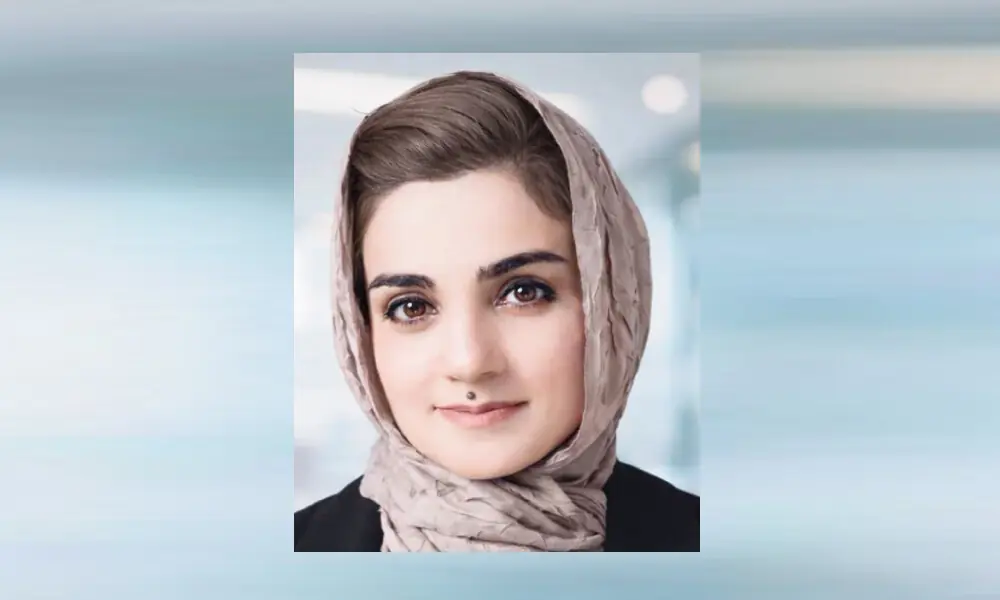
Huma Yahya Khattak is the Chief Executive Officer of EV Technologies, the Pakistani electric mobility company behind the ELFA Electric brand. She is Pakistan’s first female CEO leading an electric vehicle manufacturing company.
EV Technologies operates under Wavetec, a Pakistani technology group with four decades of experience in research, product development, and technology-led innovation.
BR Research recently spoke with Huma about the opportunities and challenges facing Pakistan’s emerging electric two-wheeler market. The following are edited excerpts from the conversation:
BR Research: What would large-scale electrification of the two-wheeler segment mean for fuel imports, household transport costs, and the wider economy?
Huma Yahya Khattak: In Pakistan, the two-wheeler conversation is more about economics than carbon emissions. The Pakistan Economic Survey 2025–26 reports 39.09 million registered vehicles, of which 30.46 million are motorcycles. A petrol motorcycle can cost approximately Rs8 per kilometre in fuel, compared with around Rs1 to Rs1.5 per kilometre in electricity for an electric motorcycle, depending on fuel prices, electricity tariffs, and riding conditions. For high-mileage commuters, delivery riders, and other motorcycle-dependent households, that difference can translate into thousands of rupees in monthly savings and greater disposable income.
At the national level, the economic implications become even more significant. Pakistan continues to spend billions of dollars annually on petroleum imports, while approximately 40 percent of the country’s petrol is consumed by two- and three-wheelers. Electrifying this segment is therefore not only a transport priority but also an economic and energy-security priority.
BRR: What are the main barriers preventing electric motorcycles from moving beyond a niche market in Pakistan?
HYK: I would put the barriers into three connected areas: the upfront economics, the financing ecosystem, and consumer confidence. The crucial point is that Pakistan does not have a demand problem. We have an adoption ecosystem problem.
The first barrier is the upfront price. An electric motorcycle typically costs more than a conventional 70cc motorcycle, even though its running cost is substantially lower. For a mass-market consumer, particularly someone purchasing a motorcycle out of a monthly salary, the upfront price, and the size of the deposit matter more than the total cost of ownership over three or four years. So, the industry must move from simply selling an electric vehicle to making the electric vehicle financially accessible.
The second barrier is financing, and the Pakistan Accelerated Vehicle Electrification Program (PAVE) experience is very revealing. The first phase received 269,149 applications against a target of 41,000 vehicles, demonstrating strong consumer interest. Yet banks approved only 4,075 of the 44,689 applications referred to them, and only 5,409 electric two- and three-wheelers had reportedly been distributed by early May. That tells us something important: consumers are willing to buy electric vehicles, but conventional retail financing is not yet equipped to finance this category at scale.
ELFA’s experience under the first phase of PAVE reinforces this point. The brand ranked among the top three to four participating companies in terms of consumer demand, demonstrating that customers are willing to adopt electric motorcycles when credible products and meaningful financial support are available.
The third barrier is confidence, particularly around the battery. Consumers are seeking more assurance about battery life, replacement cost, range, resale value, warranties, and after-sales support. Scale will not come from subsidies alone. It will come from predictable quality, credible warranties, proper battery standards, reliable after-sales networks, and financing that reflects the lower running cost of an electric vehicle.
BRR: After accounting for purchase price, financing, electricity, maintenance, battery replacement, and resale value, how does the total cost of owning an ELFA electric motorcycle compare with a petrol motorcycle?
HYK: The right comparison is not the purchase price alone, but the total cost of ownership over the life of the motorcycle. For a high-mileage rider, that equation increasingly favours electric. Take the ELFA EV125. It is priced at Rs 345,000 plus tax, with a 72V/32Ah LiFePO4 battery (Lithium Iron Phosphate Battery or LFP) and a 100+ km range. It is also backed by a three-year or 50,000-kilometre battery warranty, whichever comes first. At 40 kilometres a day, our savings calculator estimates annual fuel and electricity costs of about Rs 119,720 for a petrol motorcycle versus Rs 16,060 for the EV125, a potential saving of roughly Rs 104,000 a year. The actual saving will vary with mileage, fuel prices, and electricity tariffs.
Maintenance also favours the electric vehiclebecause there is no engine oil, oil filter, or engine tuning, while the battery is the key long-term cost to factor in. Financing terms and resale value also influence the exact payback period, which is why I would assess each customer’s usage and financing profile rather than claim one universal payback figure. The fundamental point is simple: the EV may cost more to buy, but for someone who rides regularly, it can cost substantially less to own. That is where the real economic case for electric two-wheelers lies.
BRR: Which developments in battery cost, range, charging time, safety and useful life are likely to have the greatest impact on electric motorcycle adoption in Pakistan?
HYK: For Pakistan’s two-wheeler market, I would focus on four things: cost, usable range, battery life, and safety. Charging speed matters, but for a motorcycle that can be charged overnight, reliability and battery longevity are more important. Globally, battery economics are moving in the right direction. Bloomberg NEF reported that average lithium-ion battery-pack prices fell to a record low of $108 per kWh in 2025, down 8 percent year on year. Average LFP battery-pack prices were $81 per kWh, compared with $128 per kWh for NMC packs, highlighting LFP’s growing cost advantage. LFP chemistry is also gaining market share globally, particularly in mass-market electric vehicle applications: the IEA says Lithium Iron Phosphate Battery packs were more than 40 percent cheaper than NMC (a type of lithium-ion battery that uses a cathode made of nickel, manganese, and cobalt) on average in 2025 and now account for more than half of electric vehicle batteries.
For Pakistan, this is where the industry has an opportunity to build local capability in battery-pack assembly, battery management, testing, and quality control. It can reduce costs while giving manufacturers greater control over safety and life-cycle performance. The real breakthrough is therefore not simply a cheaper or faster-charging battery. It is a battery that is affordable, safe, durable, and predictable over its full life. That is what will move electric motorcycles from early adoption to mass-market adoption.
BRR: What gaps in charging, after-sales service, spare parts, technical skills, supply chains, and resale markets need to be addressed before the industry can scale?
HYK: For electric two-wheelers, the infrastructure gap is often misunderstood. Most riders can charge at home or work, so the immediate priority is safe and accessible charging for apartment residents and others without dedicated parking. The government’s NEV Policy recognizes this by requiring electric vehicle charging provisions in new building codes and targeting 3,000 charging stations by 2030.
The bigger challenge is the after-sales ecosystem. Pakistan already has a large motorcycle repair network, but electric powertrains require skills in motors, controllers, diagnostics, and battery management. The NEV Policy itself identifies workforce training, quality and safety standards, and local manufacturing as key pillars of the transition. At ELFA, our approach is to upgrade the existing motorcycle repair ecosystem rather than replace it. We are developing mechanic training so technicians can confidently service electric powertrains.
BRR: With the previous auto policy expired, the new policy delayed and EV concessions extended for only one year, how is regulatory uncertainty affecting pricing, investment, and product planning across the industry?
HYK: The policy direction is clear, but the implementation horizon needs greater certainty. Pakistan’s NEV Policy 2025–30 targets 30 percent of new vehicle sales to be electric by 2030, so the government has clearly established the direction of travel.
The immediate issue is that the broader Auto Policy 2026–31 is still being finalized. AIDEP 2021–26 expired at the end of June 2026, and the government has also extended certain EV-related tax concessions through June 2027 under the FY2026–27 budget. That provides welcome short-term continuity, but it is still only one year of visibility. Recent reporting indicates that the draft five-year auto policy was returned for further revision following objections from industry stakeholders.
For an EV manufacturer, this matters because localisation decisions are not annual decisions. Tooling, battery-pack assembly, vendor development, technical training, and dealer networks require multi-year commitments. When the fiscal framework is known for only 12 months while the strategic policy is still evolving, companies naturally phase investment and manage risk more cautiously.
BRR: What changes in taxation, tariffs, standards, and regulation are needed to support EV adoption without creating permanent dependence on subsidies or protection?
HYK: For electric two-wheelers, the immediate priority is establishing consistent standards for batteries, chargers, controllers, and electrical safety. The government has already taken a major step, with the Ministry of Industries directing PSQCA to develop standards for lithium-ion vehicle batteries, including safety, durability, thermal performance, and battery management systems.
On taxation and tariffs, incentives should increasingly reward local value addition. There is a difference between assembling imported components and developing local capability in battery packs, electronics, components, testing, and engineering. The tariff structure should recognize that difference and encourage manufacturers to move progressively up the value chain.
BRR: Which electric motorcycle components can realistically be produced locally over the next five years, and what currently prevents deeper localisation?
HYK: Pakistan already has a strong two-wheeler vendor ecosystem, and that gives us a significant starting advantage. Frames, body panels, seats, wiring harnesses and many mechanical components can be produced locally, while motors, controllers, chargers, and battery-pack assembly are realistic areas for deeper localisation over the next five years.
The bigger opportunity is to move from assembly towards higher-value electric vehicle components and capabilities. Government statements have placed local content in Pakistan’s conventional motorcycle industry at more than 90 percent, but EV localisation needs to be measured by value rather than simply by the number of locally sourced parts. The highest-value components, particularly battery cells and some electronic components, remain largely imported. At ELFA, our goal is not just to localise more parts, but to build local capability in engineering, electronics, software, testing, and systems integration. Those capabilities create much greater long-term value and are ultimately what can make Pakistan competitive beyond the domestic two-wheeler market.
BRR: What is ELFA’s current production capacity, sales scale and localisation level, and what targets has it set for the next three to five years?
HYK: We want to scale responsibly, with production, localisation and after-sales capability growing together. ELFA currently has installed production capacity of more than 1,000 motorcycles per month, which we are expanding to more than 2,000 units per month. We have sold more than 2,000 electric motorcycles and have an additional pipeline of approximately 3,000 units that we are fulfilling through December 2026.
We are now preparing the business to produce and supply more than 25,000 electric motorcycles in 2027 alone, with further growth planned in the years ahead. This expansion will be supported by increased production capacity, a wider sales and after-sales network, stronger supplier development and deeper local technical capability.
A sizeable proportion of the motorcycle’s mechanical components is already sourced locally, while battery cells and certain high-value electrical components remain imported. Our localisation strategy is focused not only on increasing the number of locally sourced parts but also on building higher-value capabilities in battery-pack assembly, engineering, electronics, software, testing, and systems integration.
Financing is equally important to scaling adoption. Our partnership with Wasl Mobility Modaraba provides Shariah-compliant financing options, helping address the upfront affordability barrier.
BRR: How does ELFA plan to compete as more local assemblers and imported electric motorcycle brands enter the Pakistani market?
HYK: Competition is healthy for the category. More credible manufacturers mean greater consumer awareness, stronger supplier economics, and faster learning across the industry. The market is already showing strong momentum. Electric two-wheeler sales increased sharply in 2025, while early 2026 data also point to continued growth. The challenge is therefore no longer to prove that a market for electric motorcycles exists; it is to build a category that consumers can trust.
The greater risk is allowing the industry to compete on price alone. A cheaper motorcycle with a weak battery, limited-service coverage or poor warranty support may reduce the purchase price, but it increases the customer’s cost and can undermine confidence in the entire category. Our strategy is to compete on the total ownership experience: local engineering, battery and vehicle quality, accessible financing, after-sales support, and reliable service. Our technology base through Wavetec gives us an additional advantage in engineering and product development.
DATE . 8/Sep/2026