
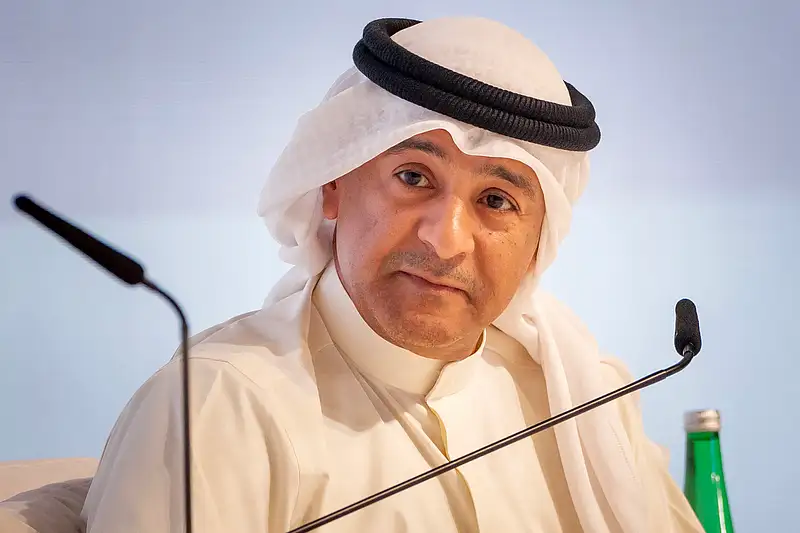
Jasem Mohamed Albudaiwi. Photo: AFP/FADEL SENNA
The unified permit, or GCC Grand Tourist Visa, is expected to let tourists visit all six Gulf countries on a single visa, similar to Europe’s Schengen visa
- PUBLISHED: Tue 8 Sept 2026, 9:11 AM UPDATED: Tue 8 Sept 2026, 10:48 AM
- By:
- Sahim Salim
Add as a preferred
source on Google
- Share:


The long-awaited unified GCC tourist visa will “see the light soon”, the Gulf bloc’s secretary-general has said, indicating that the Schengen-style permit is moving closer to launch.
Jasem Mohamed Albudaiwi, Secretary-General of the Gulf Cooperation Council (GCC), said the visa would make it easier for international visitors to travel between all six member states.
21 Jan, 2026
SHARJAH
His comments came during a special session at the Security and History Dialogue 2026 in Riyadh on September 6.
He did not specify a launch date or give further details about the visa’s cost, validity or application process.
The unified permit, also referred to as the GCC Grand Tourist Visa, is expected to allow foreign tourists to visit the UAE, Saudi Arabia, Bahrain, Qatar, Oman and Kuwait on a single visa, similar to how the Schengen visa facilitates travel across several European countries.
As reported by Khaleej Times previously, the permit had been approved, with implementation being handled by interior ministries and other relevant authorities.
Unified visa: A brief history
The unified tourist visa proposal was unanimously approved by GCC tourism ministers in October 2023. The following month, GCC interior ministers approved the unified Gulf tourist visa, moving the scheme further towards implementation.
In June 2025, UAE Minister of Economy Abdulla bin Touq Al Marri told Khaleej Times that the single GCC tourist visa had been approved and was awaiting implementation.
At the time, an exact launch date had not been announced, while the cost and duration of the visa also remained undisclosed.
Al Marri described the unified permit as a step towards deeper regional integration and strengthening the Gulf’s appeal as a single tourism destination.
UAE-Bahrain travel project
Albudaiwi referred to the visa while listing a series of projects aimed at deepening integration and making movement between GCC countries easier.
He pointed to the UAE-Bahrain single-point air travel project as one example.
“You complete passport procedures in Bahrain, and when you arrive in Abu Dhabi, Dubai, Sharjah or any city, you enter without stopping at an immigration officer,” Albudaiwi said during the Riyadh dialogue.
The UAE and Bahrain officially launched the pilot phase of the ‘One-Point Air Travellers’ project in February 2026, initially connecting Zayed International Airport in Abu Dhabi and Bahrain International Airport.
The system uses electronic connectivity, biometric verification and e-gates to process passenger information before arrival.
The GCC had approved the one-stop travel system in November 2025, with the UAE and Bahrain selected to pilot it. The initiative is designed to allow GCC citizens to complete travel procedures at a single point before departure rather than repeating immigration and other checks upon arrival.
The one-stop travel system and the unified tourist visa are separate projects. The former is aimed at streamlining travel by GCC citizens, while the tourist visa is intended to make movement across the region easier for foreign visitors.
GCC integration
Albudaiwi expanded on the Gulf integration drive during the 15th AIM Congress in Dubai on September 7.
He said decades of joint Gulf action had produced the GCC Free Trade Area, Customs Union and Common Market, alongside strategic projects in transport, energy and infrastructure.
Albudaiwi said GCC integration had become a driver of investment in its own right, with the six economies increasingly connected through cross-border projects, business networks and supply chains. He also identified tourism, transport and logistics among the sectors being opened up by national economic transformation programmes.
The theme of openness also featured in Albudaiwi’s remarks later on September 7 during the opening panel of the third Hili Forum in Abu Dhabi.
There, he said the foreign policies of GCC states were built on mutual respect and a genuine commitment to the principles of good neighbourliness, in accordance with international and UN principles and laws.
DATE . 9/Sep/2026